Summer in Seattle 2027
Training at a Glance
Who This Course is For - experienced DBT clinicians and researchers who are active members of an ongoing DBT consultation team
Dates for This Training - July 26–28, 2027
Early Bird Rate | Standard Rate $1,500
Course Specifics - In-person
Upcoming Dates
Pricing
Trainers

Tony P. DuBose, PsyD
Anthony P. DuBose, PsyD, serves as the Vice President of Institute Services and Director of Continuing Education/Continuing Medical Education (CE/CME) at Behavioral Tech Institute. His career has been shaped by a longstanding commitment to expanding access to effective care for individuals at high risk for suicide and self injury. Dr. DuBose first encountered Dialectical Behavior Therapy (DBT) while working with hospitalized adolescents, and the transformative outcomes he witnessed set the course for his professional life.
For more than a decade, Dr. DuBose has led Behavioral Tech’s global training and implementation efforts, working in close collaboration with professional associations, government agencies, and large healthcare systems to strengthen their capacity to deliver high quality, sustainable DBT services. In this role, he has guided teams of internationally recognized experts and partnered with leaders across multiple countries and U.S. states to design and implement large scale DBT training models. He plays a key role in the development of DBT training models, many of which have been translated into multiple languages and integrated into diverse cultural and organizational contexts.
Dr. DuBose is known for his collaborative and strategic approach to implementation of DBT in systems, both large and small. He works closely with policymakers, administrators, clinical leaders, and key stakeholders to help them build programs that are both evidence based and responsive to local needs. His work reflects a deep respect for the communities he serves and a belief that effective implementation requires humility, partnership, and a shared commitment to improving care for people in crisis.
He has trained and consulted with providers worldwide on the treatment of borderline personality disorder, substance use disorders, and suicidal and self injurious behaviors in both adolescents and adults. He has played a central role in several national and regional DBT implementation initiatives and continues to support organizations seeking to expand access to evidence based care.
Dr. DuBose is a member of the International Dissemination and Training & Implementation Committees of the World Association for Dialectical Behavior Therapy (WDBTA) and previously served on its transitional Board of Directors as Treasurer. He is licensed as a psychologist in Washington State and is certified by the DBT Linehan Board of Certification (DBT LBC).
He earned his doctoral degree in clinical psychology from Pacific University of Oregon, completed his predoctoral internship at Western State Hospital, and fulfilled his residency requirements as a postdoctoral fellow in clinical child psychology at the University of Washington. Prior to becoming a psychologist, he earned a Master of Science in counseling from Loyola University of New Orleans and worked as a family therapist. His early work with adolescents at the Child Study and Treatment Center—where he served as director of the older adolescent program—solidified his dedication to serving individuals at highest risk.
Dr. DuBose is a Founding Member and former President & CEO of the Evidence Based Treatment Centers of Seattle, PLLC. He held clinical faculty appointments in the University of Washington’s Department of Psychiatry and Behavioral Sciences and Department of Psychology from 1998 to 2012 and collaborated with Marsha Linehan, PhD, ABPP, and colleagues on research focused on DBT, particularly its dissemination and implementation. He also served on the strategic planning group that established the WDBTA. He lives in Seattle, Washington in the United States.
Kathryn Korslund, PhD, ABPP

Kathryn Korslund, PhD, ABPP
Kathryn E. Korslund, PhD, ABPP, is a clinical psychologist and behavioral health executive with more than 25 years of experience in Dialectical Behavior Therapy (DBT), evidence‑based suicide treatment, and enterprise‑level clinical operations. She served as Associate Director of the Behavioral Research and Therapy Clinics at the University of Washington, where she worked with Dr. Marsha Linehan as a co‑investigator on multiple DBT clinical trials and co‑developed the University of Washington DBT Adherence Coding Scale. She is also a co‑developer of the DBT Adherence Checklist for Individual Therapy (DBT AC‑I) and a contributing author to the 2025 revised DBT Skills Training Manual and DBT Skills Training Handouts & Worksheets.
Dr. Korslund held senior leadership roles at THIRA Health—including Chief Executive Officer, Chief Clinical Officer, and Clinical Director—where she designed, built, and led comprehensive DBT residential, PHP, and IOP programs for individuals with emotion dysregulation, suicidal behavior, and complex comorbidities. She later served as Director of Clinical Care at Two Chairs, overseeing national remote‑first clinical operations and tech‑enabled digital triage implementation.
She is the founding President of the DBT‑Linehan Board of Certification and has provided DBT training, consultation, and fidelity monitoring across North America, Europe, Asia, and Australia. Dr. Korslund is a licensed psychologist in Washington State and board certified by the American Board of Professional Psychology, a Fellow of the American Academy of Clinical Psychology, and additionally certified by the DBT‑Linehan Board of Certification and the Center for the Treatment and Study of Anxiety.
Jennifer Sayrs, PhD, ABPP

Jennifer Sayrs, PhD, ABPP
Washington, US
Jennifer Sayrs, PhD, ABPP, is the Executive Director and co-founder of the Evidence Based Treatment Centers of Seattle (EBTCS). At EBTCS, she directs the DBT Center, one of the first DBT programs in the nation to be certified by the Linehan Board of Certification. She is the co-author of the book DBT Teams: Development and Practice, written with the DBT treatment developer, Dr. Marsha Linehan.
Dr. Sayrs completed her graduate training at the University of Nevada, Reno, where she studied DBT and behavioral theory, followed by a postdoctoral fellowship with Dr. Linehan at the University of Washington, where she was the clinical coordinator for Dr. Linehan’s DBT research clinic. She has served as a research therapist and adherence coder on several DBT trials; she is also a trainer for Behavioral Tech, providing a wide range of DBT workshops around the world. In addition to 25 years of experience providing DBT, she also provides CBT for a variety of anxiety-related problems. Dr. Sayrs is certified by the Linehan Board of Certification and the American Board of Cognitive and Behavioral Psychology and is a licensed psychologist in the state of Washington.
Vibh Forsythe Cox, PhD

Vibh Forsythe Cox, PhD
Vibh Forsythe Cox, PhD, is a Clinical Associate professor and the director of the Marsha M. Linehan Dialectical Behavior Therapy (DBT) Clinic at the University of Washington. She teaches courses and provides supervision to advanced graduate students learning to deliver DBT. She is a licensed clinical psychologist and a DBT-Linehan Board of Certification certified clinician. She has provided clinical services in a variety of settings, including Veteran Affairs medical centers, university psychological services centers, private outpatient clinics, and maximum-security forensic inpatient settings. Dr. Forsythe Cox has been a Training Development specialist and is also a trainer and consultant for The Behavioral Tech institute, a non-profit training company founded by Dr. Linehan which provides training and consultation for DBT clinicians nationally and internationally. Dr. Forsythe Cox has worked to increase collaborative efforts in the DBT community to help providers better serve clients with diverse identities.
Sara Schmidt, PhD

Sara Schmidt, PhD
Sara Schmidt, PhD, is a licensed clinical psychologist in the state of Washington, where she is in private practice, and a DBT-Linehan of Certification, Certified Clinician™. Until 2021, she served as the Associate Director of the Trauma and Suicide Treatment Research Lab at the Seattle Institute for Biomedical and Clinical Research, part of the VA Puget Sound Health Care System, where she was a Co-Investigator on NIMH-funded research focused on the evaluation and implementation of DBT and the DBT Prolonged Exposure (DBT PE) protocol for PTSD. As part of this work, she co-developed the DBT Adherence Checklist for Individual Therapy (DBT AC-I), a tool that can be used by DBT therapists to evaluate the degree to which they are delivering DBT in a way that is consistent with the treatment manual, as well as the DBT Program Fidelity Checklist (DBT PFC), which enables programs to evaluate their fidelity to DBT and identify potential areas for improvement.
Dr. Schmidt received her BA in Psychology from Wesleyan University, and my MA and PhD in Clinical-Community Psychology from the University of South Carolina. She completed her pre-doctoral internship at Westchester Jewish Community Services in Hartsdale, NY., and her postdoctoral training with Dr. Melanie Harned at the University of Washington’s Behavioral Research and Therapy Clinics (BRTC). Following her postdoctoral fellowship, she remained at the BRTC as a Research Scientist, where she directed the graduate training program in DBT. She currently maintains a Clinical Instructor position through the Department of Psychology supervising advanced doctoral students. She also previously worked as a Research Scientist at Behavioral Tech, LLC, where she assisted in developing training content, methods, and customized implementation plans.
Dr. Schmidt has experience providing DBT in a variety of settings, including community mental health, private practice, and residential facilities, and works with both adults and adolescents. She regularly provides professional trainings and consultation in DBT and DBT PE nationally and internationally and has published several peer reviewed articles and book chapters on these topics.
Jasper Berg, PhD
Jasper Berg, PhD
Washington, US
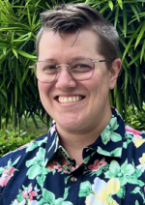
Jasper Berg, PhD, is the Co-Director of the DBT Center at the Evidence Based Treatment Centers of Seattle (EBTCS). Dr. Berg earned their doctoral degree in clinical psychology at Emory University, studying personality disorders and impulsivity. They completed their clinical internship at Yale University, and their postdoctoral fellowship within the VA Puget Sound Health Care System. In addition to DBT, Dr. Berg has expertise in evidence-based interventions for trauma and substance use.
Dr. Berg is a volunteer with the DBT-LBC Mentorship Program to support clinicians pursuing DBT-LBC Certification. They are also a clinical instructor at the University of Washington Marsha M. Linehan DBT Clinic, where they supervise psychology graduate students providing comprehensive DBT.
More About This Training
- Full Training Description
- Learning Objectives
- Prerequisites
- CE/CME Information
- Study Resources
- Technical Requirements
- Additional Information
- Detailed Schedule
We are pleased to welcome a focused group of participants whose experience and engagement will contribute to a rich learning community.
Providing Dialectical Behavior Therapy (DBT) with mastery requires current and thorough knowledge of the concepts, strategies, procedures, protocols of the treatment, as well as evidence for the treatment, so that clinicians can apply this information to novel situations arising in treatment. Guided by the principles of dialectics, the effective clinician moves with mindful attention and flexibility through the treatment. Experienced DBT therapists are invited to share the long, glorious days of summer on the waterfront in Seattle with leading DBT experts in an intimate, conversational setting. This training in advanced topics reflects recent highly requested specialized content, including the DBT consultation team, exposure, structuring the environment, managing contingencies in DBT, validation, and adherence and fidelity in practice.
Space is limited. Applicants will be selected based on their knowledge of the treatment, the nature of work they are currently conducting in DBT, and the degree to which they are practicing in a comprehensive DBT program.
Accepted participants will be asked to submit a case formulation related to one of the advanced training topics by May 1, 2027. Cases will be reviewed in advance, and one case will be selected for consultation during each training topic, offering participants a meaningful opportunity for thoughtful discussion, consultation, and applied learning. Cases submitted after the deadline will not be considered.
This training is intended for mental health professionals and researchers who:
- Are active members of an ongoing DBT consultation team
- Have been actively practicing DBT for at least one year
Learning Objectives will be available soon.
This training is intended for mental health professionals and researchers who:
- Are active members of an ongoing DBT consultation team
- Have been actively practicing DBT for at least one year
Behavioral Tech Institute will apply to provide CE for this training.
Statements forthcoming.
Venue: Apella by Alexandria, Seattle
Address: 1150 Eastlake Ave E, Seattle WA 98109
Nearby hotel: Silver Cloud Hotel – Lake Union. We will offer a room block for participants of this training.
Tuition includes access to a special DBT Networking Event on July 26. Additional details will be posted soon.
Schedule for July 26–28, 2027; other dates may differ. No Detailed Schedule Yet
To learn more about the types of training and consultation that BTECH offers, visit our Training Catalog here.
Not finding the training you’re looking for? Check out our services for agencies and systems to learn if we can bring a training to you!