To learn more about the types of training and consultation that BTECH offers, visit our Training Catalog here.
Interested in a training that is sold out? Please join our Waiting List so we can contact you as we schedule future events.

- This event has passed.
Dialectical Behavior Therapy Foundational Training™ (SOLD OUT)
Level 3
Sydney, Australia
August 19-23, 2019
Training Description
This five-day training is designed specifically for individual therapists or skills trainers who are members of an intensively trained DBT team, but have not completed Intensive training themselves. It is meant to assist teams that have hired new staff or experienced turnover by allowing newer team members to get trained in the standard content of DBT. Lecture, video, role-play and small group exercises will be used to teach DBT theory and strategies in depth. Participants agree to attend the entire five days of training, do their best to learn the material, and participate in a willing, committed manner.
The training requires that participants work in an active DBT® program, participate in a consultation team, and will continue learning DBT with a mentor. Only people who have attended the full ten days of the Dialectical Behavior Therapy Intensive Training™ are able to serve as mentors and sponsor team members to a Foundational Training.
Training Objectives:
1. Use DBT research data to engage stakeholders in DBT.
2. Adopt and practice a dialectical worldview in treatment.
3. Incorporate DBT assumptions about clients into treatment.
4. Explain the biosocial model of BPD/pervasive emotion dysregulation.
5. Apply DBT principles and strategies during DBT consultation team meetings
6. Structure treatment according to the target hierarchies for each modality (e.g., individual, skills training, phone).
7. Complete DBT pre-treatment tasks (e.g., identify client’s goals, orient to DBT, obtain commitments).
8. Assess long-term and acute risk for suicide.
9. Apply DBT suicide crisis protocols.
10. Implement the levels of validation in DBT.
11. Conduct a chain analysis of an episode of a target behavior.
12. Generate and evaluate solutions for specific problematic links from a chain analysis.
13. Describe the goals of the DBT skills modules.
14. Describe the DBT problem-solving strategies (skills training, cognitive modification, exposure, contingency management).
15. Implement DBT stylistic strategies (reciprocal and irreverent communication).
16. Implement DBT case management strategies (consultation-to-the-client and environmental intervention).
Schedule
| General Schedule | |||
|---|---|---|---|
| 8:00 | – | 8:30 | Registration, CE/CME Sign-in |
| 8:30 | – | 10:15 | Morning Session 1 |
| 10:15 | – | 10:30 | Break |
| 10:30 | – | 12:00 | Morning Session 2 |
| 12:00 | – | 1:00 | Lunch on your own |
| 1:00 | – | 2:15 | Afternoon Session 1 |
| 2:15 | – | 2:30 | Break |
| 2:30 | – | 3:45 | Afternoon Session 2 |
| 3:45 | – | 4:00 | Break |
| 4:00 | – | 4:45 | Afternoon Session 3 |
| 4:45 | – | 5:00 | Q&A, Completion of Evaluation, and CE/CME Sign-out |
CE NOTE: Behavioral Tech calculates the continuing education credits for this training by the start time and end time. 100 percent attendance is required, as is signing IN and OUT each morning and afternoon, to receive CE credits. Partial credits cannot be issued.
Trainers
Tony DuBose, PsyD
 Anthony P. DuBose, PsyD, serves as the Vice President of Institute Services and Director of Continuing Education/Continuing Medical Education (CE/CME) at Behavioral Tech Institute. His career has been shaped by a longstanding commitment to expanding access to effective care for individuals at high risk for suicide and self injury. Dr. DuBose first encountered Dialectical Behavior Therapy (DBT) while working with hospitalized adolescents, and the transformative outcomes he witnessed set the course for his professional life.
For more than a decade, Dr. DuBose has led Behavioral Tech’s global training and implementation efforts, working in close collaboration with professional associations, government agencies, and large healthcare systems to strengthen their capacity to deliver high quality, sustainable DBT services. In this role, he has guided teams of internationally recognized experts and partnered with leaders across multiple countries and U.S. states to design and implement large scale DBT training models. He plays a key role in the development of DBT training models, many of which have been translated into multiple languages and integrated into diverse cultural and organizational contexts.
Dr. DuBose is known for his collaborative and strategic approach to implementation of DBT in systems, both large and small. He works closely with policymakers, administrators, clinical leaders, and key stakeholders to help them build programs that are both evidence based and responsive to local needs. His work reflects a deep respect for the communities he serves and a belief that effective implementation requires humility, partnership, and a shared commitment to improving care for people in crisis.
He has trained and consulted with providers worldwide on the treatment of borderline personality disorder, substance use disorders, and suicidal and self injurious behaviors in both adolescents and adults. He has played a central role in several national and regional DBT implementation initiatives and continues to support organizations seeking to expand access to evidence based care.
Dr. DuBose is a member of the International Dissemination and Training & Implementation Committees of the World Association for Dialectical Behavior Therapy (WDBTA) and previously served on its transitional Board of Directors as Treasurer. He is licensed as a psychologist in Washington State and is certified by the DBT Linehan Board of Certification (DBT LBC).
He earned his doctoral degree in clinical psychology from Pacific University of Oregon, completed his predoctoral internship at Western State Hospital, and fulfilled his residency requirements as a postdoctoral fellow in clinical child psychology at the University of Washington. Prior to becoming a psychologist, he earned a Master of Science in counseling from Loyola University of New Orleans and worked as a family therapist. His early work with adolescents at the Child Study and Treatment Center—where he served as director of the older adolescent program—solidified his dedication to serving individuals at highest risk.
Dr. DuBose is a Founding Member and former President & CEO of the Evidence Based Treatment Centers of Seattle, PLLC. He held clinical faculty appointments in the University of Washington’s Department of Psychiatry and Behavioral Sciences and Department of Psychology from 1998 to 2012 and collaborated with Marsha Linehan, PhD, ABPP, and colleagues on research focused on DBT, particularly its dissemination and implementation. He also served on the strategic planning group that established the WDBTA. He lives in Seattle, Washington in the United States.
Anthony P. DuBose, PsyD, serves as the Vice President of Institute Services and Director of Continuing Education/Continuing Medical Education (CE/CME) at Behavioral Tech Institute. His career has been shaped by a longstanding commitment to expanding access to effective care for individuals at high risk for suicide and self injury. Dr. DuBose first encountered Dialectical Behavior Therapy (DBT) while working with hospitalized adolescents, and the transformative outcomes he witnessed set the course for his professional life.
For more than a decade, Dr. DuBose has led Behavioral Tech’s global training and implementation efforts, working in close collaboration with professional associations, government agencies, and large healthcare systems to strengthen their capacity to deliver high quality, sustainable DBT services. In this role, he has guided teams of internationally recognized experts and partnered with leaders across multiple countries and U.S. states to design and implement large scale DBT training models. He plays a key role in the development of DBT training models, many of which have been translated into multiple languages and integrated into diverse cultural and organizational contexts.
Dr. DuBose is known for his collaborative and strategic approach to implementation of DBT in systems, both large and small. He works closely with policymakers, administrators, clinical leaders, and key stakeholders to help them build programs that are both evidence based and responsive to local needs. His work reflects a deep respect for the communities he serves and a belief that effective implementation requires humility, partnership, and a shared commitment to improving care for people in crisis.
He has trained and consulted with providers worldwide on the treatment of borderline personality disorder, substance use disorders, and suicidal and self injurious behaviors in both adolescents and adults. He has played a central role in several national and regional DBT implementation initiatives and continues to support organizations seeking to expand access to evidence based care.
Dr. DuBose is a member of the International Dissemination and Training & Implementation Committees of the World Association for Dialectical Behavior Therapy (WDBTA) and previously served on its transitional Board of Directors as Treasurer. He is licensed as a psychologist in Washington State and is certified by the DBT Linehan Board of Certification (DBT LBC).
He earned his doctoral degree in clinical psychology from Pacific University of Oregon, completed his predoctoral internship at Western State Hospital, and fulfilled his residency requirements as a postdoctoral fellow in clinical child psychology at the University of Washington. Prior to becoming a psychologist, he earned a Master of Science in counseling from Loyola University of New Orleans and worked as a family therapist. His early work with adolescents at the Child Study and Treatment Center—where he served as director of the older adolescent program—solidified his dedication to serving individuals at highest risk.
Dr. DuBose is a Founding Member and former President & CEO of the Evidence Based Treatment Centers of Seattle, PLLC. He held clinical faculty appointments in the University of Washington’s Department of Psychiatry and Behavioral Sciences and Department of Psychology from 1998 to 2012 and collaborated with Marsha Linehan, PhD, ABPP, and colleagues on research focused on DBT, particularly its dissemination and implementation. He also served on the strategic planning group that established the WDBTA. He lives in Seattle, Washington in the United States.
Additional Faculty & Presenters
Carla Walton, PhD
 Sydney (Australia)
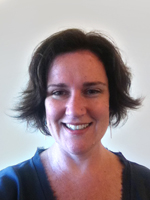
Carla Walton, PhD is Service Director of the Centre for Psychotherapy, a specialist service for Borderline Personality Disorder and Eating Disorders within Hunter New England Mental Health Service in Australia. She has been involved in treatment provision to persons with Borderline Personality Disorder using DBT, in both public and private sectors in Australia for the past 15 years. Carla is the principal investigator on a large-scale randomized clinical trial of DBT and a psychodynamic therapy, the Conversational Model. She is a member of Marsha Linehan’s annual DBT Strategic Planning Meeting at the University of Washington. She has provided training and consultation in Borderline Personality Disorder and Dialectical Behaviour Therapy throughout public and private sector services throughout Australia. Her main research interests lie in the fields of Borderline Personality Disorder and translational research.
Sydney (Australia)
Carla Walton, PhD is Service Director of the Centre for Psychotherapy, a specialist service for Borderline Personality Disorder and Eating Disorders within Hunter New England Mental Health Service in Australia. She has been involved in treatment provision to persons with Borderline Personality Disorder using DBT, in both public and private sectors in Australia for the past 15 years. Carla is the principal investigator on a large-scale randomized clinical trial of DBT and a psychodynamic therapy, the Conversational Model. She is a member of Marsha Linehan’s annual DBT Strategic Planning Meeting at the University of Washington. She has provided training and consultation in Borderline Personality Disorder and Dialectical Behaviour Therapy throughout public and private sector services throughout Australia. Her main research interests lie in the fields of Borderline Personality Disorder and translational research.
Prerequisites
Participants should meet the following criteria:
- Be a current member of an Intensively trained team.
- Be invested in learning DBT to a high standard in order to better implement the treatment in their usual settings. Participants agree to attend and fully participate in the entire training in a willing, committed manner.
- Have learned DBT in one-day or two-day trainings and/or from self-guided study of the treatment manuals.
- Agree to read the following books before the Foundational Training:
- Linehan, M.M. (2015). DBT® Skills Training Manual: Second Edition. New York: Guilford Press.
- Linehan, M.M. (2015). DBT® Skills Training Handouts and Worksheets: Second Edition. New York: Guilford Press.
- Linehan, M.M. (1993). Cognitive-Behavioral Treatment of Borderline Personality Disorder. New York, NY: Guilford Press.
Attend
Tuition
| Tuition per person | $1,800 |
Application Form
You may pay for the application fee (to indicate your interest) by adding an App Fee ticket to your cart and completing the checkout process. Please note that we will cancel your application fee if we do not receive your application form(s) within 7 days of app-fee payment.
Please send your completed application to info@behavioraltech.org. We prefer typed applications.
Download Foundational Application
Acceptance Notification
We will review applications in the order they are received. Applicants will be notified of acceptance no later than July 26, 2019.
Tuition Payment Terms
Your tuition payment is due upon receipt of the invoice; if payment is not received, we may release your space to another applicant. Please contact us at 206.675.8588 to discuss any extenuating circumstances affecting your prompt payment. Application fees and tuition are non-refundable.
Prices are quoted in U.S. dollars. We accept credit cards (Discover, MasterCard, Visa, and American Express), U.S. checks, and bank transfers. All payments must be in U.S. funds; we are unable to accept foreign checks. Please contact Customer Service at 206.675.8588 or at info@behavioraltech.org for more information about ACH or wire transfer payment options.
Due to the comprehensive nature of this training, there are no cancellations or substitutions available. If extenuating circumstances arise that prevent full attendance, please contact us as soon as possible to discuss your situation. We will do our best to provide alternative options for completing training curriculum.
For a complete list of Behavioral Tech policies and limits of liability, see policies.
Seat Availability for Onsite Events
The number of seats for our open-enrollment workshops and our application-based trainings is limited by the physical training space that is reserved for the event. Please complete your registration or submit your application at your earliest convenience, as we will not guarantee a seat for you until we have received your registration or tuition payment.
Special Accommodations
If you require special accommodations due to a disability, please contact Behavioral Tech at 206.675.8588 four weeks prior to the training so that we may provide you with appropriate service.
Technical Requirements
Novotel Sydney International Airport Hotel
22 Levey Street Wolli Creek
NSW 2205 Australia
Not finding the training you’re looking for? Check out our services for agencies and systems to learn if we can bring a training to you!